

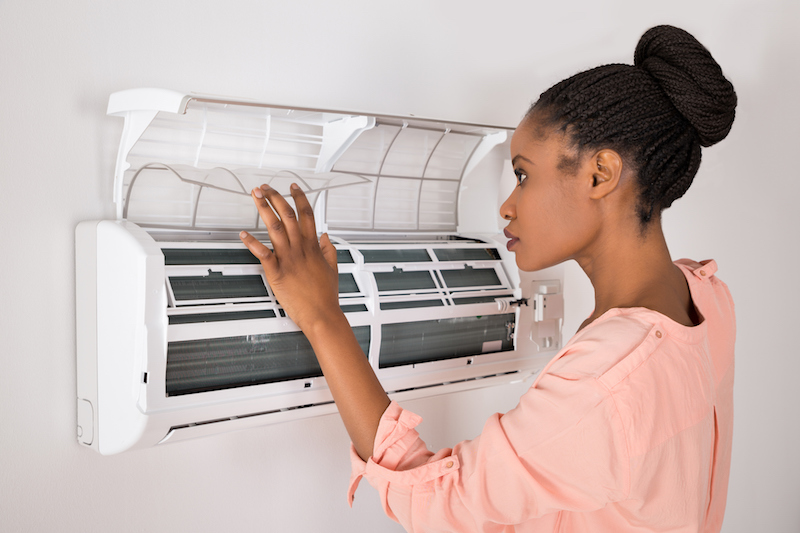
You shouldn’t have to sacrifice comfort or drain your wallet to keep your house at a pleasant temp during hot days.
But what is the right temp, exactly? We discuss advice from energy pros so you can find the best temp for your house.
Here’s what we advise for the most energy-efficient setting for air conditioning in Morgantown.
Recommended Thermostat Settings for Summer
Most families find placing the thermostat at 72-73 degrees provides ideal comfort. However, if there’s a big difference between your interior and exterior warmth, your cooling costs will be greater.
This is our advice based on the U.S. Department of Energy (DOE) and ENERGY STAR®.
While at home: 78 degrees. While that appears too high, there are approaches you can keep your home cool without having the air conditioner running frequently.
Keeping windows and blinds shut during the day keeps chilled air where it needs to be—within your home. Some window coverings, including honeycomb shades or plantation shutters, are designed to give added insulation and improved energy efficiency.
If you have ceiling fans in your residence, the DOE says you can move thermostat settings about 4 degrees warmer without giving up comfort. That’s because they cool with a windchill effect. As they cool people, not spaces, shut them off when you leave a room.
If 78 degrees still appears too warm at first glance, try running an experiment for a week or so. Get started by upping your setting to 78 degrees while you’re at your residence. Then, gradually turn it down while adhering to the ideas above. You might be shocked at how refreshed you feel at a hotter temperature setting.
While away: 88 degrees. There’s no rationale for keeping the air conditioner on all day while your home is vacant. Moving the setting 7–10 degrees higher can save you anywhere from 5–15% on your electrical costs, according to the DOE.
When you come home, don’t be tempted to switch your thermostat under 78 to cool your home more rapidly. This isn’t effective and usually produces a bigger air conditioner expense.
A programmable thermostat is a good way to keep your temp under control, but it requires setting programs. If you don’t utilize programs, you run the risk of forgetting to raise the set temperature when you go.
If you need a hassle-free solution, think over buying a smart thermostat. This thermostat works with with your phone, so it realizes when you’re at home and when you’re away. Then it automatically modifies temperature settings for the biggest savings. How much exactly? An estimated $180 yearly on heating and cooling, according to ENERGY STAR.
Another plus of having a smart thermostat? You can use your phone to watch and change temperature settings from nearly anywhere.
While sleeping: Around 70 degrees. While ENERGY STAR suggests 82 degrees, that could be unpleasant for most families. Most people sleep better when their sleeping space is chilly, so that’s why the National Sleep Foundation suggests 65–68 degrees. But that could be too chilly, based on your PJ and blanket preference.
We suggest using an equivalent test over a week, setting your temp higher and gradually lowering it to pick the ideal setting for your house. On mild nights, you could learn keeping windows open at night and running a ceiling fan is a superior option than using the air conditioning.
More Methods to Save Energy This Summer
There are extra approaches you can spend less money on cooling bills throughout warm weather.
- Upgrade to an energy-efficient AC system. Central air conditioners only last about 12–15 years and become less efficient as they become older. An updated air conditioner can keep your home more comfortable while keeping AC expenses small.
- Book yearly air conditioner service. Routine air conditioner maintenance keeps your system operating properly and might help it work at better efficiency. It may also help extend its life expectancy, since it enables techs to find little problems before they cause a major meltdown.
- Put in new air filters regularly. Read manufacturer instructions for switching your air filter. A dirty filter can cause your system to short cycle, or switch on and off too often, and drive up your cooling.
- Measure attic insulation levels. Just about 90% of homes in the United States don’t have enough insulation, according to the Insulation Institute. Most southern climates require 13–14” of attic insulation, while northern climates should have 16–18”.
- Have your ductwork checked. Ductwork that has separated over time can let cool air into your attic, walls or crawl space. This can create big comfort problems in your residence, such as hot and cold spots.
- Seal holes, doors and windows. Keep muggy air where it belongs by plugging holes. You can also caulk or weather strip doors to trap more conditioned air indoors.
Use Less Energy During Warm Weather with Mountain Air
If you are looking to conserve more energy during hot weather, our Mountain Air professionals can help. Get in touch with us at 304-244-3530 or contact us online for additional information about our energy-saving cooling products.